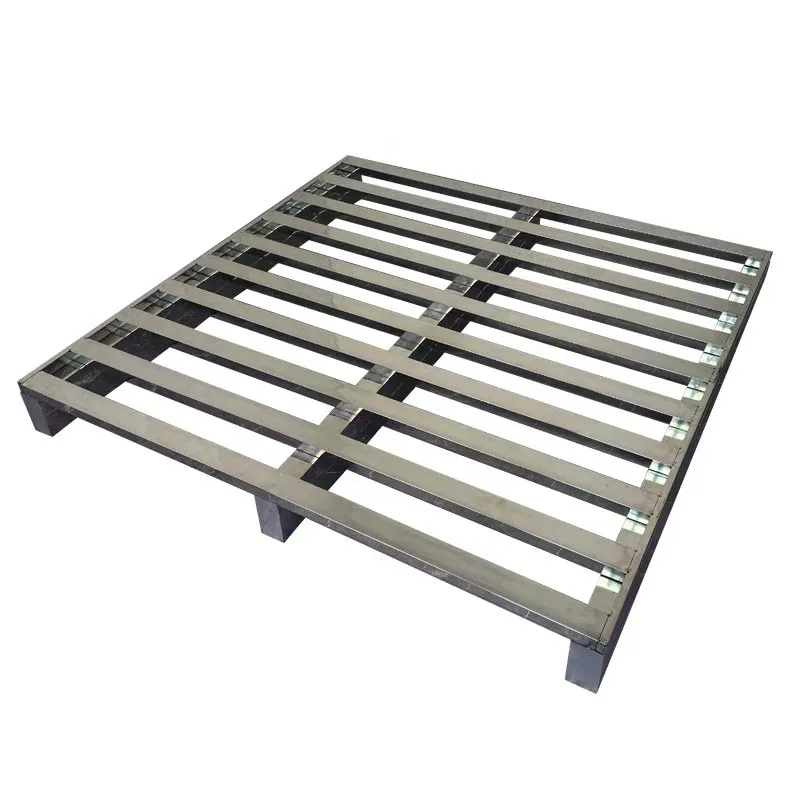
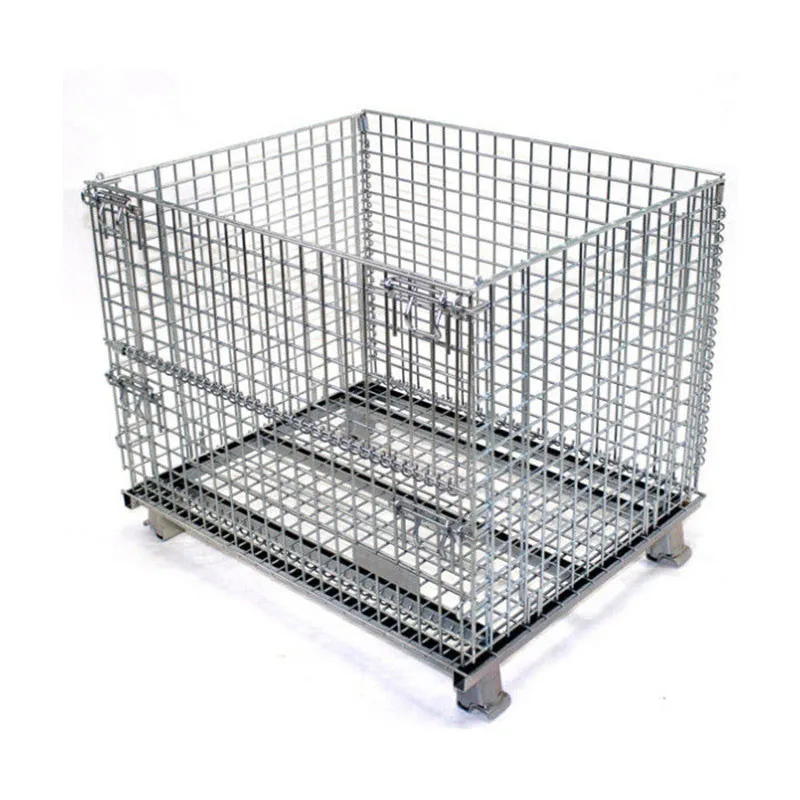
warehouse steel pallet
Mastering Industrial Logistics with Custom Iron Pallets: An In-Depth Analysis In the relentless pursuit of efficiency and resilience within modern supply chains and manufacturing ecosystems, the foundational elements of material handling often determine the operational ceiling of an enterprise. Among these critical components, the pallet stands as an unsung hero, silently facilitating the movement and storage of goods across diverse industrial landscapes. While traditional wooden and plastic variants have long served their purpose, the escalating demands for durability, safety, environmental sustainability, and consistent performance in automated systems have propelled the iron pallet into a position of paramount importance. This robust solution, often overlooked in its complexity, is in fact a sophisticated engineering marvel designed to withstand the harshest environments and heaviest loads. Its increasing adoption signifies a strategic shift towards long-term investment in infrastructure that minimizes operational disruptions, reduces total cost of ownership (TCO), and aligns with stringent safety and environmental regulations. As industries like petrochemicals, metallurgy, and advanced manufacturing continue to evolve, the demand for custom-engineered material handling solutions grows exponentially, with the iron pallet emerging as a cornerstone of this transformative wave. Jinzehong Wire Mesh, a leading innovator in this specialized sector, offers the Custom Size Iron Metal Pallet, a testament to superior engineering, precision manufacturing, and an unwavering commitment to meeting the precise and often unique demands of industrial clients globally. This comprehensive article delves into the intricate world of iron pallets, exploring their manufacturing processes, technical advantages, diverse applications, and the strategic considerations for their procurement, providing B2B decision-makers and technical personnel with a holistic understanding of their unparalleled value proposition. We will dissect the elements that contribute to their longevity, discuss the factors influencing iron pallet performance, and illuminate how customized solutions from reputable manufacturers like Jinzehong Wire Mesh can significantly enhance operational efficiency and safety in mission-critical environments. Understanding the Core: Defining the Industrial Iron Pallet and Its Kin To fully appreciate the advanced capabilities of the iron pallet , it is essential to first understand its fundamental nature and differentiate it from other common pallet types. Generally, what are the three types of pallets that dominate the material handling industry? These are primarily wooden, plastic, and metal pallets. Wooden pallets, historically the most prevalent, offer low initial cost and easy repair but suffer from limited lifespan, susceptibility to pests, moisture absorption, splintering, and inconsistent dimensions. Plastic pallets, while lighter and more hygienic than wood, often struggle with high static and dynamic load capacities, are prone to cracking under extreme temperatures or impacts, and have a higher upfront cost, with limited recyclability options for certain types. In stark contrast, metal pallets, particularly those constructed from robust pallet iron (which broadly refers to high-strength steel alloys), represent the pinnacle of durability, load-bearing capacity, and environmental resilience. An iron pallet is fundamentally a structural platform fabricated from various grades of steel, designed for the unitization, storage, and transportation of goods. These pallets are engineered to provide superior strength-to-weight ratios, allowing them to handle significantly heavier loads than their wooden or plastic counterparts. Their structural integrity ensures dimensional consistency, which is crucial for integration into automated storage and retrieval systems (AS/RS) and conveyor lines, where deviations can lead to costly operational bottlenecks. Furthermore, the inherent non-combustibility of steel makes iron pallet solutions ideal for applications involving flammable materials or in facilities with stringent fire safety regulations. The material choice, typically high-grade carbon steel or galvanized steel, is driven by the specific application's requirements for strength, corrosion resistance, and environmental exposure. For instance, in outdoor or corrosive environments, hot-dip galvanized or powder-coated iron pallet solutions are preferred, offering a protective barrier against rust and chemical degradation, thereby significantly extending their operational lifespan and preserving their structural integrity over decades. This deliberate selection of materials and advanced fabrication techniques elevates the iron pallet beyond a simple transport platform, positioning it as a long-term capital asset that contributes directly to a more efficient, safer, and sustainable supply chain. Their robust design typically includes features like reinforced top decks, heavy-duty stringers or skids, and precision-welded joints, all contributing to their exceptional performance and longevity in demanding industrial settings. The precise engineering involved ensures that an iron pallet can consistently perform under continuous heavy loads, extreme temperatures, and harsh chemical exposures, making them indispensable for critical industrial operations where reliability is paramount. The Meticulous Craft: Manufacturing Process of the Custom Size Iron Metal Pallet The creation of a high-quality iron pallet , especially a custom-sized one, is a sophisticated process that blends advanced material science with precision engineering and meticulous fabrication techniques. It begins with the crucial selection of raw materials, predominantly high-grade structural steel such as Q235B, Q345B, or SS400. These specific grades are chosen for their superior tensile strength (e.g., Q235B typically offers 370-500 MPa), yield strength (e.g., Q235B at 235 MPa minimum), and excellent weldability, ensuring the finished product can withstand immense static and dynamic loads without deformation or structural failure. The initial design phase utilizes state-of-the-art CAD/CAM software, allowing for precise modeling and simulation. Finite Element Analysis (FEA) is often employed at this stage to predict stress distribution under various load conditions, optimizing the pallet's structure for maximum strength and minimal material usage, which directly impacts the overall iron pallet price . This digital prototyping ensures that even custom dimensions and unique load requirements are met with engineered precision before any physical material is cut. The manufacturing journey then proceeds through several critical stages: firstly, precision cutting, utilizing advanced techniques like laser cutting or plasma cutting, guarantees exact dimensions for each component, minimizing material waste and ensuring a perfect fit during assembly. This accuracy is paramount for pallets destined for automated systems where dimensional consistency is non-negotiable. Following cutting, forming processes such as bending and pressing shape the steel sheets and profiles into the required structural elements, typically executed by CNC-controlled hydraulic press brakes to achieve precise angles and contours. The next pivotal stage is welding, where components are fused together. Modern manufacturers employ advanced welding techniques such as Metal Inert Gas (MIG) welding, Tungsten Inert Gas (TIG) welding, and increasingly, robotic welding. Robotic welding ensures unparalleled consistency, high penetration, and strong, uniform weld seams, drastically reducing human error and enhancing the overall structural integrity of the iron pallet . This automated precision is a significant factor in the durability and longevity of the final product. Image: Precision welding during iron pallet fabrication. Upon completion of welding, the iron pallet undergoes critical surface treatments. These treatments are not merely aesthetic but are vital for corrosion resistance, enhanced durability, and suitability for specific environments. Common options include hot-dip galvanizing, which provides a thick, sacrificial zinc coating offering superior corrosion protection against rust and abrasive environments, critical for outdoor or high-humidity applications. Powder coating, on the other hand, offers a durable, chemical-resistant finish available in various colors, ideal for indoor use or where specific chemical resistance is required. Electroplating, another method, provides a thinner, uniform metallic coating, often used for lighter corrosion protection. The choice of surface treatment is meticulously discussed with the client to match the pallet's intended operational environment and expected lifespan, influencing both performance and long-term iron pallet price . Throughout the entire manufacturing process, stringent quality control measures are implemented. This begins with raw material inspection, verifying chemical composition and mechanical properties against specifications. In-process inspections monitor critical dimensions, weld quality, and structural integrity. Post-fabrication, the finished iron pallet undergoes rigorous testing protocols to ensure compliance with international standards such as ISO (e.g., ISO 9001 for Quality Management Systems), ANSI (American National Standards Institute, particularly for material handling equipment), and AWS (American Welding Society) D1.1 for structural welding codes. These tests include static load testing, dynamic load testing, impact resistance, and drop tests to simulate real-world conditions. Non-destructive testing (NDT) methods like ultrasonic testing and magnetic particle inspection are routinely applied to detect any internal flaws in welds or material, guaranteeing the structural integrity. Jinzehong Wire Mesh adheres to these exacting standards, ensuring that every Custom Size Iron Metal Pallet delivered meets the highest benchmarks for performance, safety, and longevity, often exceeding typical industry expectations. This comprehensive approach to manufacturing, from material selection and advanced design to precision fabrication and rigorous quality assurance, underpins the unparalleled reliability and long-term value of a professionally engineered iron pallet . The precision in manufacturing allows for tight tolerances, which is especially beneficial in automated systems where consistent pallet dimensions are crucial for smooth operation and reduced downtime. This commitment to quality at every step translates into a product that delivers superior performance, extended service life, and ultimately, a lower total cost of ownership for the end-user. Technical Specifications and Performance Metrics: The Science Behind the Iron Pallet The superior performance of an iron pallet is rooted in its meticulously engineered technical specifications and the quantifiable metrics that define its capabilities. Unlike their counterparts, metal pallets are designed to precise standards, ensuring optimal functionality in complex logistical and manufacturing environments. Understanding these parameters is crucial for B2B decision-makers to evaluate the long-term value and operational fit. Key specifications include dimensions, material grades, various load capacities, weight, available surface treatments, operational temperature ranges, expected lifespan, and compliance with industry standards. For instance, standard dimensions often conform to ISO 6780 (e.g., 1200x1000mm or 1200x800mm), but Custom Size Iron Metal Pallets offer infinite variability to integrate seamlessly with existing racking systems, conveyor belts, or unique product dimensions. The choice of material grade, such as Q235B (a common carbon structural steel with a minimum yield strength of 235 MPa) or Q345B (a low alloy high strength steel with 345 MPa minimum yield strength), directly impacts the load capacity and overall durability. For specialized applications requiring higher corrosion resistance or specific strength-to-weight ratios, stainless steel (e.g., 304 or 316 grade) or aluminum alloys may be utilized, though these typically incur a higher iron pallet price . Typical Iron Pallet Parameters & Specifications Parameter Typical Range / Description Benefits for Users Dimensions (L x W x H) Customizable (e.g., 800x1200mm, 1000x1200mm, 1200x1200mm up to 2000x3000mm). Height often 100-200mm. Optimized space utilization, perfect fit for AS/RS, specific product dimensions, reduced damage during transit. Material Grade Q235B (Carbon Steel), Q345B (Low Alloy High Strength Steel), SS400 (Structural Steel), Stainless Steel (304/316 for specialized use). High tensile strength (370-500 MPa), superior yield strength (235-345 MPa), excellent weldability, ensures structural integrity and longevity. Static Load Capacity Typically 3,000 kg to 8,000 kg (6,600 lbs to 17,600 lbs), some custom designs exceed 15,000 kg. Ability to hold significant weight when stationary (e.g., in racking), maximizing storage density and safety. Dynamic Load Capacity Typically 1,000 kg to 3,000 kg (2,200 lbs to 6,600 lbs). Capacity for safe handling by forklifts or pallet jacks while in motion, ensuring operational safety and efficiency. Racking Load Capacity Typically 800 kg to 2,000 kg (1,760 lbs to 4,400 lbs). Guaranteed safety and stability when stored in elevated racking systems without central support, preventing collapse. Pallet Weight Variable, typically 30 kg to 100 kg+ depending on size and load requirements. Indication of robustness; heavier often means more durable but requires suitable handling equipment. Surface Treatment Options Hot-dip Galvanizing (HDG), Powder Coating, Electro-galvanizing (Zinc Plating), Paint. Superior corrosion resistance, chemical resistance, enhanced hygiene, aesthetic appeal, extended service life. Temperature Range -40°C to +80°C (-40°F to +176°F), specific alloys for wider ranges. Stability and performance in extreme cold storage or high-heat environments without deformation or material degradation. Expected Lifespan 10-20+ years, significantly outperforming wood (2-3 years) and plastic (5-8 years). Reduced replacement costs, lower total cost of ownership, less operational disruption, enhanced sustainability. Compliance Standards ISO 9001 (Quality Management), ANSI MH1.1 (Pallets), AWS D1.1 (Welding), specific industry certifications (e.g., HACCP for food, ATEX for hazardous zones). Guaranteed quality, safety, interoperability, and regulatory adherence for global operations. The implications of these parameters are profound for operational efficiency and safety. For instance, the high static load capacity of an iron pallet allows for taller and denser storage in warehouses, maximizing valuable floor space and reducing overall storage footprint. Its superior dynamic load capacity ensures safe handling during transportation, minimizing the risk of product damage or worker injury. The extended lifespan directly translates to significant cost savings over time by virtually eliminating the need for frequent replacements and repairs associated with wooden or plastic pallets. While the initial iron pallet price might be higher than other types, a comprehensive Total Cost of Ownership (TCO) analysis consistently demonstrates that the long-term economic benefits, including reduced maintenance, zero replacement cycles, minimized product damage, and enhanced safety, far outweigh the initial investment. Furthermore, the inherent fire resistance of steel significantly reduces fire hazards in storage areas, a critical safety advantage in many industrial settings. The structural consistency and dimensional stability of an iron pallet are also crucial for environments utilizing automation, such as AS/RS, conveyor systems, and robotic handling, where uniform pallet characteristics prevent jams and operational delays. This precision contributes to seamless integration, reduced wear and tear on automated equipment, and ultimately, higher throughput and efficiency. Understanding these technical nuances allows businesses to make informed procurement decisions that contribute to a safer, more efficient, and more sustainable supply chain. The investment in a custom iron pallet from a reputable manufacturer is not merely a purchase; it is a strategic decision that fortifies logistical operations against the myriad challenges of modern industry, providing a reliable foundation for continuous improvement and operational excellence. Diverse Applications: Where the Iron Pallet Excels in Critical Industries The unparalleled durability, strength, and adaptability of the iron pallet make it an indispensable asset across a multitude of demanding industrial sectors. Its ability to withstand extreme conditions, handle massive loads, and integrate seamlessly into complex operational flows distinguishes it from other pallet types. In the Petrochemical Industry, for instance, where hazardous chemicals and volatile substances are routinely transported and stored, the iron pallet is preferred due to its inherent non-combustibility and resistance to chemical corrosion (when adequately treated). Unlike wood, it doesn't absorb spills, and unlike some plastics, it won't melt or deform under high temperatures or in the presence of aggressive solvents. This ensures containment safety, reduces fire risks, and prevents cross-contamination, which are critical considerations for compliance with strict safety regulations (e.g., OSHA, EPA). For industries like Metallurgy, involved in the production and processing of metals, the sheer weight of materials such as steel coils, billets, and heavy castings necessitates a material handling solution of immense strength. The iron pallet , constructed from high-strength pallet iron , provides the robust support required, capable of bearing loads that would crush or deform conventional pallets. Its resistance to high temperatures also makes it suitable for transporting materials from furnaces or cooling lines, without concerns about structural degradation. Similarly, in Heavy Manufacturing and Automotive sectors, where large, heavy components like engine blocks, transmission assemblies, or press parts are moved, custom iron pallet designs provide precise support, preventing costly damage to high-value goods. The ability to customize dimensions and add specialized fixtures ensures secure transit and storage, minimizing production delays. Image: Iron pallet integration in a modern warehousing facility. The Logistics and Warehousing industry, particularly those deploying Automated Storage and Retrieval Systems (AS/RS), benefits immensely from the consistent dimensions and structural rigidity of iron pallet solutions. Unlike wooden pallets that can warp or splinter, causing jams and costly downtime, metal pallets maintain their exact form, ensuring smooth, uninterrupted operation of automated machinery. This consistency leads to significantly higher throughput, reduced maintenance costs for automation equipment, and enhanced overall operational efficiency, offering a superior return on investment despite the initial iron pallet price . Furthermore, in Food and Beverage Processing and Pharmaceuticals, where hygiene is paramount, stainless steel iron pallet options or those with specialized coatings are invaluable. They are non-porous, do not harbor bacteria or pests, are easily washable, and resistant to harsh cleaning agents, ensuring compliance with strict sanitary regulations (e.g., FDA, HACCP). Their longevity also means fewer risks of contamination from deteriorating pallet materials. For Cold Storage and Frozen Food Logistics, iron pallet solutions perform exceptionally well. Unlike wood, which absorbs moisture and can become brittle or rot at sub-zero temperatures, or certain plastics that may crack, steel maintains its structural integrity across extreme temperature ranges, preventing product damage due to pallet failure. Beyond specific industries, iron pallet solutions offer distinct advantages in various application scenarios. Their corrosion resistance, enhanced through galvanization or powder coating, ensures longevity in humid, wet, or chemically aggressive environments, significantly extending their service life and reducing replacement cycles. The inherent strength contributes to enhanced safety by eliminating splinters, nails, and reducing the risk of collapse under heavy loads, safeguarding both personnel and valuable inventory. In automated systems, the precision and uniformity of metal pallets contribute to energy saving by reducing friction and preventing operational glitches, optimizing material flow and minimizing energy consumption associated with system restarts or manual interventions. Moreover, their durability means less damage to goods during handling and transit, reducing product loss and associated costs. The long lifespan of an iron pallet also aligns with corporate sustainability initiatives, as they are virtually 100% recyclable at the end of their exceptionally long service life, reducing landfill waste and minimizing environmental impact compared to disposable alternatives. This comprehensive suite of benefits makes the iron pallet a strategic investment for any enterprise seeking to optimize its material handling processes for safety, efficiency, and sustainability. Unrivaled Advantages: Why Iron Pallets Are a Strategic Investment The decision to invest in iron pallet solutions is a strategic one, driven by a comprehensive analysis of long-term benefits that far outweigh the initial higher iron pallet price compared to traditional wooden or plastic alternatives. The advantages are multifaceted, impacting operational efficiency, safety, sustainability, and ultimately, the bottom line. Foremost among these is Durability and Lifespan. A well-engineered and properly maintained iron pallet can boast an operational lifespan of 10 to 20 years, and often much longer, easily outperforming wooden pallets (which average 2-3 years due to breakage, splintering, and pest issues) and plastic pallets (typically 5-8 years, often failing due to cracking from impact or temperature extremes). This extended service life dramatically reduces replacement costs, maintenance expenditures, and the logistical overhead associated with managing a constant cycle of pallet repair and disposal. The long-term cost savings inherent in this longevity represent a compelling argument for the initial investment. Secondly, Superior Load Bearing Capacity is a hallmark of the iron pallet . Constructed from high-strength pallet iron , these pallets can handle significantly heavier static, dynamic, and racking loads than any other pallet type. This allows businesses to transport and store denser, heavier materials, optimizing storage space, reducing the number of pallets required, and enhancing safety in high-density warehousing environments. For example, while a standard wooden pallet might support a dynamic load of 1,000 kg, an iron pallet can routinely handle 2,000 kg to 3,000 kg, with custom designs exceeding 5,000 kg, providing unparalleled robustness for heavy industry applications. Image: Heavy-duty iron pallet designed for industrial strength. Enhanced Hygiene and Ease of Maintenance are critical benefits, particularly in regulated industries like food, pharmaceuticals, and cleanroom environments. Unlike porous wood, which can absorb liquids and harbor bacteria, mold, or pests, metal pallets are non-porous, easily cleaned, steam-sterilizable, and resistant to most chemicals. This significantly reduces the risk of contamination and ensures compliance with stringent sanitary standards. Their smooth, non-absorbent surfaces also make them ideal for handling spills, which can be easily cleaned without permanent damage or absorption into the pallet material. From an Environmental Benefits perspective, iron pallet solutions are exceptionally sustainable. They are typically made from recycled steel, and at the end of their very long service life, they are 100% recyclable, contributing to a circular economy model and significantly reducing landfill waste. This contrasts sharply with disposable wooden pallets or certain non-recyclable plastic variants, aligning businesses with global sustainability goals and reducing their carbon footprint. Superior Safety Features are another compelling advantage. Metal pallets are inherently fire-resistant, unlike highly flammable wooden pallets, a crucial factor for facilities storing flammable goods or operating under strict fire codes. They eliminate the risks associated with splinters, protruding nails, or broken components, common hazards with wooden pallets that can lead to worker injuries or damage to goods and equipment. The consistent dimensional stability of metal pallets is also paramount for automated systems, preventing jams and breakdowns, thereby ensuring safer and more reliable operations. The precise and uniform dimensions of an iron pallet are also key for seamless integration into modern, highly automated warehouses and distribution centers. This consistency prevents costly interruptions, reduces wear and tear on automated machinery, and maximizes throughput efficiency. While the initial iron pallet price may seem a barrier, a detailed Total Cost of Ownership (TCO) analysis reveals that the cumulative savings from reduced replacements, minimal maintenance, lower product damage rates, enhanced safety, and improved operational uptime make iron pallet solutions a highly cost-effective and strategic long-term investment. This holistic view of expenditure, rather than just upfront cost, truly captures the unparalleled value proposition of these robust material handling assets, fortifying a company's logistical backbone against the rigors of industrial operations and paving the way for sustained efficiency and safety. Customization: Tailoring the Custom Size Iron Metal Pallet to Your Exact Needs One of the most compelling advantages of an iron pallet , particularly from a specialized manufacturer like Jinzehong Wire Mesh, is the unparalleled degree of customization available. In complex industrial environments, off-the-shelf solutions often fall short of meeting specific operational parameters, leading to inefficiencies, increased product damage, or safety compromises. Customization allows businesses to tailor their material handling infrastructure precisely to their unique products, workflows, and facility layouts, maximizing efficiency and optimizing the return on investment. The customization process for a Custom Size Iron Metal Pallet begins with a comprehensive consultation to understand the client's precise requirements. This includes detailed discussions on the dimensions of the goods to be stored or transported, the specific load capacities (static, dynamic, racking) required, the environmental conditions (temperature extremes, humidity, chemical exposure), handling equipment compatibility (forklift type, conveyor system), and any industry-specific compliance standards. Key aspects of customization often include: Dimensions: Beyond standard sizes, pallets can be manufactured to exact length, width, and height specifications, including specific under-clearances for machinery or racking systems. This precision ensures optimal space utilization and seamless integration into automated systems. Material Grade: While common carbon steels like Q235B are standard, specialized applications may require higher strength alloys like Q345B, or corrosion-resistant materials such as various grades of stainless steel (e.g., 304 or 316) for food-grade, pharmaceutical, or highly corrosive environments. The choice of material directly impacts the pallet's performance, lifespan, and ultimately the iron pallet price . Surface Finish: Customization extends to the protective coating. Options range from hot-dip galvanizing for superior corrosion resistance in outdoor or wet conditions, to powder coating for durability and a wide array of color options for visual identification or specific chemical resistance, and electroplating for a clean, uniform finish. Foot Type and Entry Options: Pallets can be designed with various foot structures, including skids, stringers, or individual legs, and optimized for 2-way or 4-way entry by forklifts or pallet jacks, based on handling preferences and equipment. Decking Options: The top surface of the pallet can be customized. Options include open mesh decking for drainage and reduced weight, solid steel decks for handling smaller items or preventing contamination, or corrugated decks for added rigidity and grip. Added Features and Accessories: Custom pallets can integrate a variety of specialized features. These may include forklift guide entries for precise handling, corner protectors for enhanced durability, stacking cups or posts for secure vertical storage, retaining lips or side walls to prevent product slippage, or integrated RFID tags for advanced tracking and inventory management. This level of detail in design ensures that the Custom Size Iron Metal Pallet functions as an integral, optimized component of the client's operational infrastructure, rather than a generic accessory. The process at Jinzehong Wire Mesh typically involves initial concept discussions, detailed engineering drawings and 3D models for client review, iterative design refinements, and often, prototyping and rigorous testing to validate performance before full-scale production. This collaborative approach ensures that the final product not only meets but often exceeds client expectations, providing a bespoke solution that significantly enhances operational safety, efficiency, and longevity, proving the value proposition of a tailored iron pallet over a standard one. Manufacturer Comparison and Selection Criteria for Your Iron Pallet Partner Selecting the right manufacturer for your iron pallet needs is a pivotal decision that directly impacts the quality, reliability, and long-term cost-effectiveness of your material handling solutions. While specific manufacturer comparisons require detailed client-specific analysis, understanding the key criteria for selecting a reputable and capable supplier like Jinzehong Wire Mesh is crucial. The market for industrial metal pallets can vary significantly in terms of product quality, customization capabilities, and after-sales support. Therefore, a comprehensive evaluation process is essential to ensure that your investment in an iron pallet yields the maximum strategic advantage. First and foremost, Experience and Reputation are paramount. A manufacturer with a long-standing history and a proven track record in producing high-quality metal products, specifically industrial pallets, demonstrates deep industry knowledge and reliability. Look for testimonials, case studies, and a portfolio of successful projects, particularly for custom solutions. A company's reputation for engineering excellence and timely delivery is a strong indicator of future performance. Secondly, Certifications and Compliance are non-negotiable. Reputable manufacturers should hold international quality management certifications such as ISO 9001:2015, which signifies adherence to rigorous quality control systems throughout design, manufacturing, and delivery. Furthermore, industry-specific certifications (e.g., for welding standards like AWS, or environmental compliance) and adherence to material handling standards like ANSI MH1.1 provide assurance of product safety and performance. These certifications validate the manufacturer's commitment to consistent quality and adherence to global best practices. Thirdly, Manufacturing Capabilities and Technology are critical differentiating factors. A leading supplier should possess advanced manufacturing infrastructure, including state-of-the-art laser cutting, CNC bending, and crucially, robotic welding systems. Robotic welding, as discussed earlier, ensures unparalleled precision, consistency, and structural integrity of the iron pallet , which is vital for dimensional stability and long-term performance, especially in automated environments. Automation in manufacturing also often translates to more efficient production and potentially a more competitive iron pallet price due to reduced labor costs and waste. Fourthly, Customization Expertise is a hallmark of a truly valuable partner for Custom Size Iron Metal Pallet solutions. The ability to translate unique operational requirements into bespoke pallet designs, coupled with engineerin